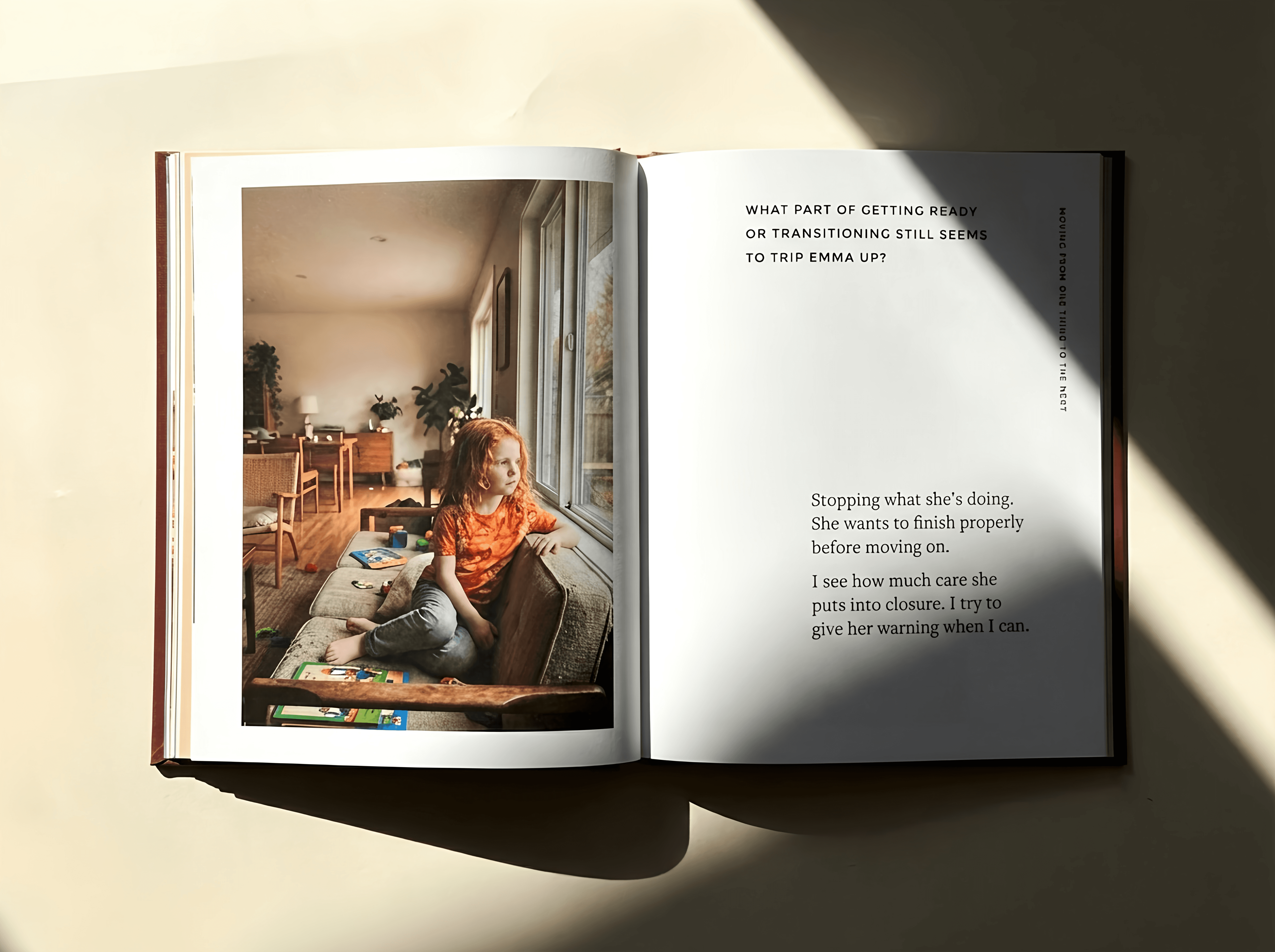
Most books we return to aren’t comprehensive. They’re specific. They capture a feeling, a moment, or a way of seeing that still feels true long after the details fade. In the context of family life, this matters even more. A book meant for a child—whether framed as letters to my son or letters to my daughter—only becomes meaningful if it reflects something real and recognizable, not a polished highlight reel.
What keeps a book openable is restraint. When a book tries to hold everything, it becomes heavy—emotionally and physically. When it focuses on one chapter of life, it invites rereading. You’re not scanning for milestones or proof of progress; you’re reconnecting with a season, a tone, a way the days felt at that time.
Books we return to don’t demand effort from the reader. They meet you where you are. Years later, a child doesn’t want to scroll through thousands of images. They want to understand who they were, what their parent noticed, and how that season of life was experienced. A book that answers those questions naturally earns its place on the shelf—and in the hand.