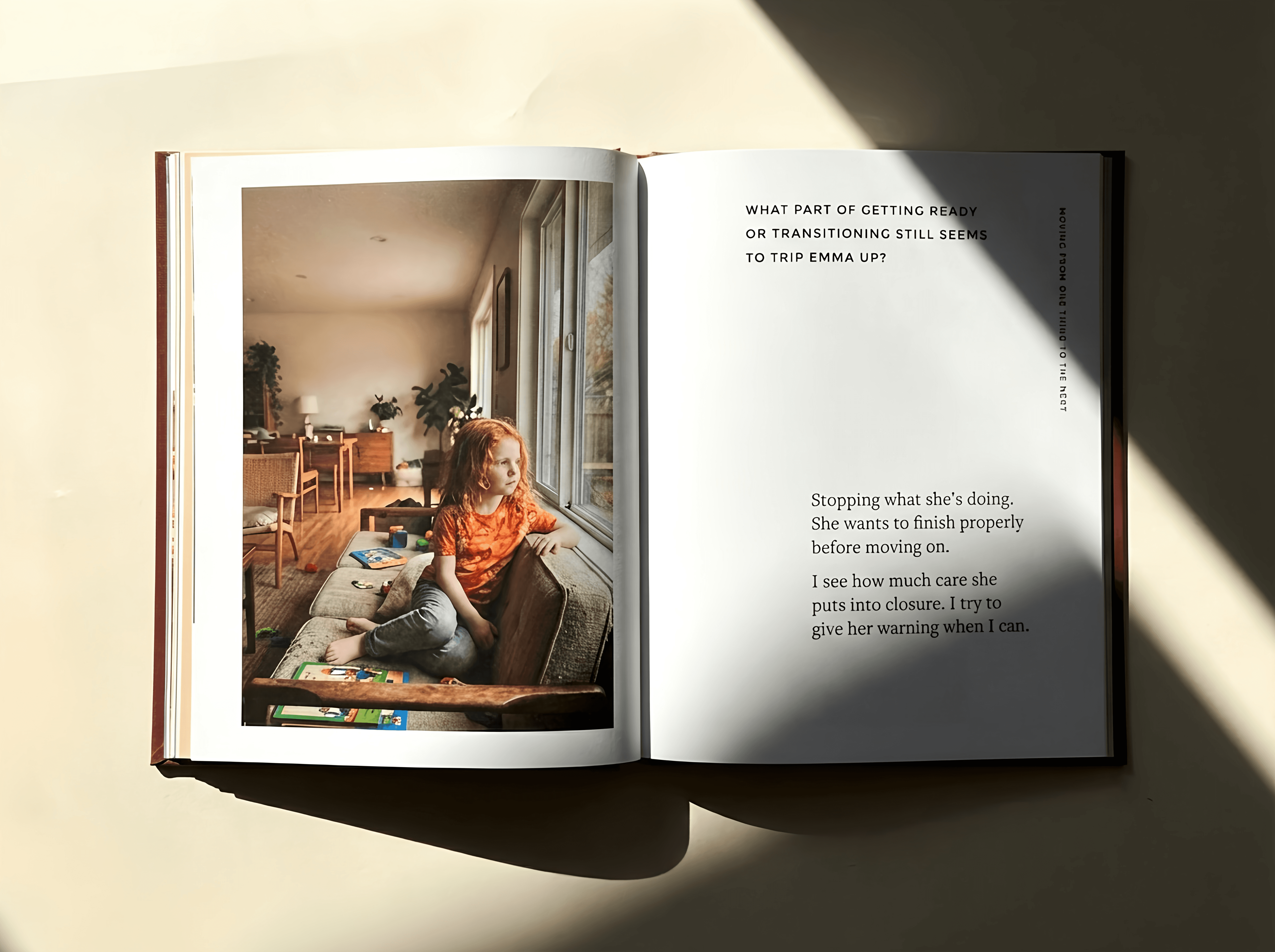
Traditional memory journaling asks parents to reflect, interpret, and summarize their child’s life. That’s cognitively demanding, emotionally loaded, and difficult to sustain. Faced with a blank page, many people default to generalities—or avoid writing altogether. Over time, the journal stalls.
Observational prompts remove that friction. Instead of asking how you feel or what something means, they ask what you noticed. A habit. A phrase. A small, repeated behavior. These details are easier to capture in real time and far more revealing in retrospect. They anchor memory in evidence rather than interpretation.
For a child reading later, observational writing is also more trustworthy. It doesn’t tell them who they were—it shows them. In the context of letters to my son or letters to my daughter, this approach preserves dignity and nuance. Affection is inferred through attention, not declared. The result feels less like performance and more like record—something worth returning to years later.