Most family memory projects fail because they never end. Journals trail off. Photo books wait for “when there’s more time.” Notes accumulate without structure. The problem isn’t motivation—it’s the absence of a clear ending. Without boundaries, memory-keeping becomes another open obligation rather than something completed.
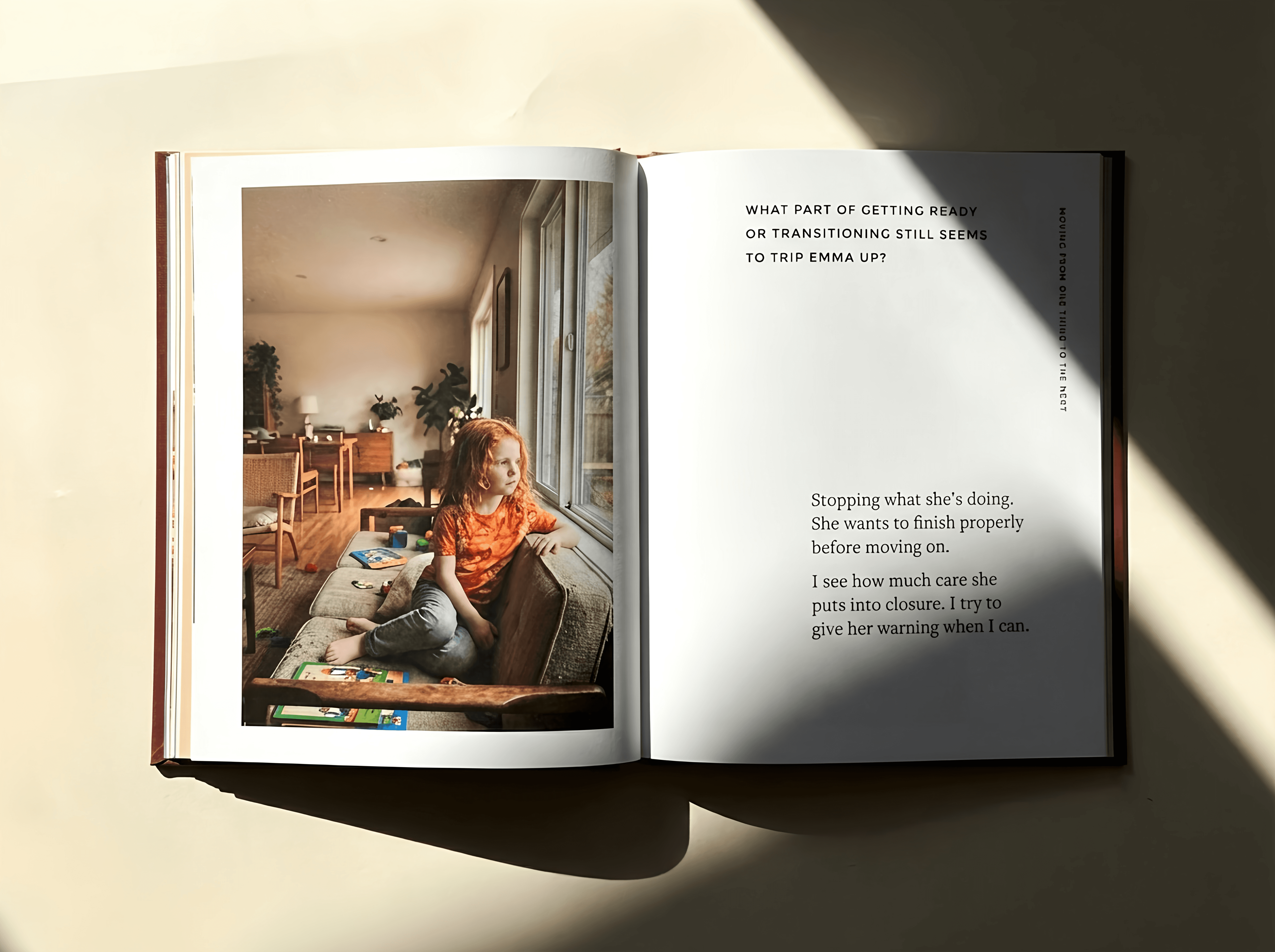
Designing books as finished chapters changes the relationship entirely. A chapter has a beginning, a middle, and a close. It doesn’t pretend to capture everything about a child’s life—only what mattered during a defined season. That constraint makes participation possible and completion likely.
A finished book also carries psychological weight. It signals care, intention, and closure. For a child reading it later—especially in something framed as letters to my daughter or letters to my son—it offers a complete artifact, not a work in progress. One chapter, clearly held, becomes something that can be revisited without feeling unfinished or overwhelming.